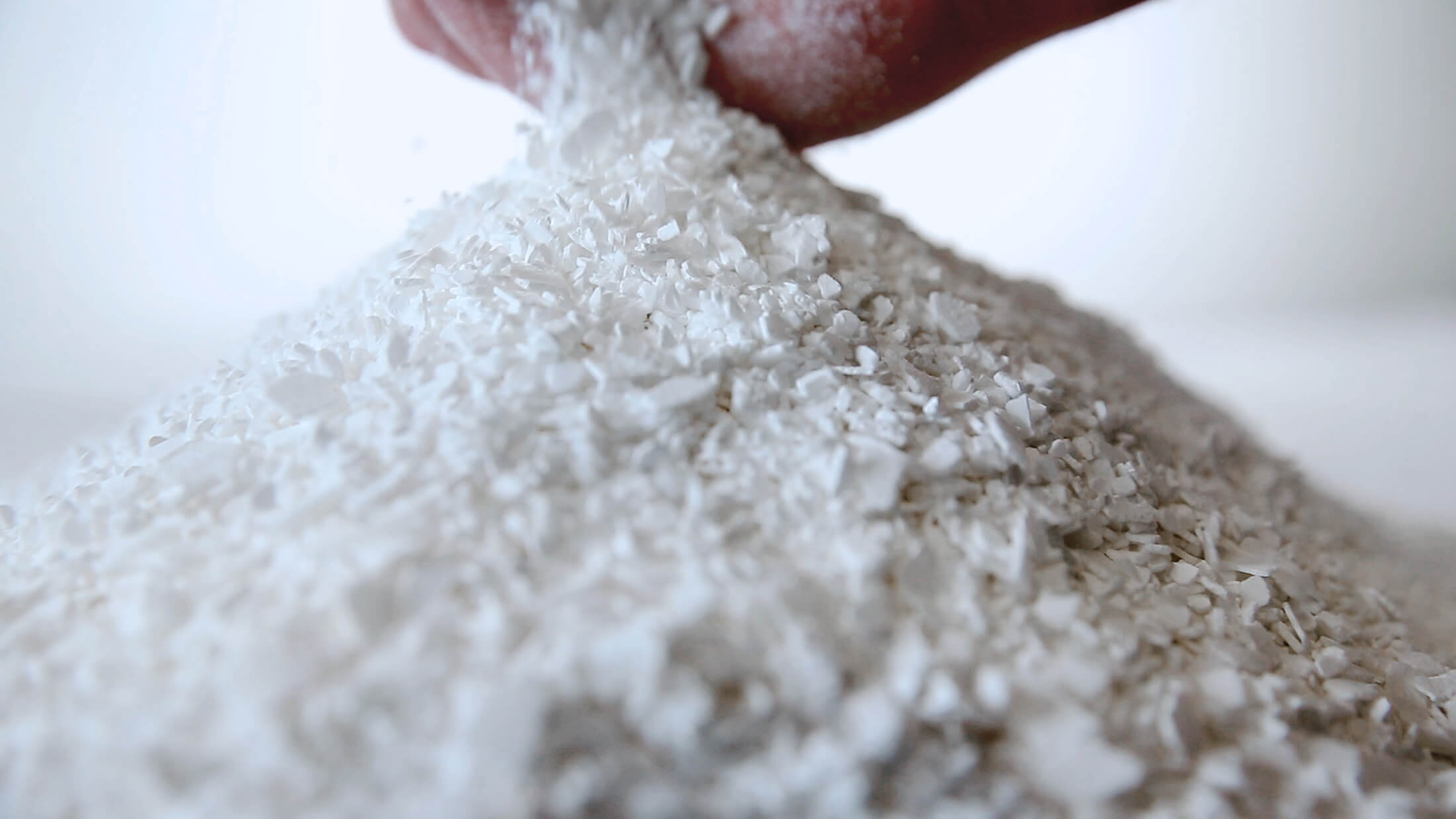
1. De-icing and Anti-Icing
Calcium chloride is highly effective for melting ice on roads, driveways, and
sidewalks during the winter months.
How to Use for De-icing:
• Sprinkle solid calcium chloride directly on the ice or snow.
• It works better at lower temperatures than other de-icers like rock salt, making
it ideal for cold regions where temperatures drop below -10°F (-23°C).
• Dosage: Typically, 1 lb of calcium chloride per 5 square feet of surface area
should be sufficient for quick ice melting.
Safety Tips:
• Calcium chloride can damage plants and concrete surfaces, so be cautious
about overuse or where you apply it.
• Wear gloves when handling it, as it can cause skin irritation.
2. Dust Control for Roads and Construction Sites
Calcium chloride is excellent for suppressing dust on unpaved roads, construction
sites, or gravel driveways.
How to Use for Dust Control:
• Spray a 30% solution of calcium chloride on dusty surfaces like roads and
construction zones.
• The calcium chloride absorbs moisture from the air, keeping the road damp and
dust-free.
• Apply periodically depending on the amount of dust and local weather
conditions.
Safety Tips:
• Use in moderation to prevent excessive moisture buildup in the environment.
3. Concrete Acceleration
Calcium chloride is often used in concrete mixtures to speed up the setting and
curing process, especially in cold weather.
How to Use in Concrete:
• Add 1–2% calcium chloride by weight of the cement to the mix (check concrete
mix instructions for best results).
• It works by accelerating the hydration process, helping the concrete set and cure
faster.
Benefits:
• Faster curing: Reduces the time it takes for concrete to cure, allowing for
quicker use.
• Prevents freezing: In colder weather, it ensures that the concrete does not
freeze during the curing process.
Safety Tips:
• Calcium chloride can increase the risk of corrosion in steel reinforcement, so use
it cautiously in reinforced concrete.
4. Food Industry Applications
Calcium chloride is used as a food additive in various products to maintain
firmness and improve texture.
How to Use in Food Processing:
• Firming Agent: Used in canned vegetables, fruits, and pickles to keep them
crisp.
• Typically, you would add 0.1–0.3% calcium chloride to the water used for
blanching or soaking the produce.
• Cheese Making: Calcium chloride is added to milk to ensure the curd forms
properly.
• A common addition is about 0.02% of the weight of milk, especially in making
cheeses like mozzarella.
Safety Tips:
• Calcium chloride used in food should be food-grade and used according to the
manufacturer’s recommendations.
5. Drying Agent (Desiccant)
Calcium chloride can be used to absorb moisture in places where humidity control
is needed.
How to Use as a Desiccant:
• Place calcium chloride in a breathable bag or container to absorb moisture
from the air. It’s commonly used in humidity-sensitive areas like basements,
storage rooms, or shipping containers.
• It’s often used in dehumidifiers for home or industrial use.
Safety Tips:
• Avoid direct contact with calcium chloride as it can cause skin irritation.
• Change out desiccant bags when they become saturated with water (they will
form a slushy solution).
6. Water Treatment
Calcium chloride is used in water treatment to soften water and remove impurities.
How to Use in Water Treatment:
• Softening water: It helps precipitate calcium and magnesium ions, which
cause hardness in water.
• Typically, it’s used in industrial water treatment plants, but small-scale
applications can be done by adding 10-15g per liter of water depending on
water hardness.
• Removing heavy metals: It reacts with certain heavy metals to form insoluble
compounds that can be removed by filtration.
Safety Tips:
• Use appropriate dosage and monitoring when adding it to water treatment
systems to avoid over-softening or scaling
- +90 312 513 2737
- +90 534 245 9970